
What is HSE in Construction?
Work safety is an important issue that must be prioritized in the workplace. Every company is obliged to ensure and guarantee the health, safety, and well-being of each of its employees. By implementing HSE, workplace accidents or hazardous risks can be minimized. This is supported by regulations in Indonesia regulated in Law No. 1 of 1970 concerning Work Safety.
So, what is meant by HSE? What is the abbreviation of HSE? How is it implemented in the construction field?
What is HSE?
HSE stands for Health, Security, and Environment, commonly known as Occupational Health and Safety (K3). Both terms actually have the same meaning or function, which is to ensure the health, safety, and well-being of employees.
HSE is a set of procedures used to identify potential hazards in the workplace and control them. In the process, there is a responsible person tasked with managing HSE in a company. This responsible person is called an HSE Officer or HSE Engineer.
The Importance of HSE for Companies
Based on the previous explanation, it can be understood that HSE plays a very important role because it is related to work safety, which affects the performance and productivity of employees. Here are some other benefits of implementing HSE in a company based on Law No. 1 of 1970:
- Preventing and reducing accidents
- Providing personal protective equipment to workers
- Preventing and controlling the emergence of work-related diseases such as physical, poisoning, infection, and transmission
- Maintaining cleanliness, health, and orderliness
- Ensuring harmony between labor, tools, environment, methods, and work processes
One of the fields or industries that are crucial for implementing HSE is the construction field. Without proper implementation of HSE, the risk of workplace accidents is very high considering various factors that support it, such as the use of heavy and dangerous equipment, working at heights, and so on.
So, what is its implementation like and why is it important to implement it in the construction field?
Implementation of HSE in the Construction
The implementation of HSE in the construction is an important and crucial step to ensure the health, safety, and well-being of workers, as well as to minimize the negative impacts on the environment from construction work. Some important points in the implementation of HSE in the construction include:
- Planning
The implementation of HSE starts with thorough preparation and planning. This planning includes hazard identification, risk assessment, and comprehensive risk control. At this stage, work procedures must be prepared before starting activities on the construction project, including ensuring the availability of Personal Protective Equipment (PPE) for all workers.
- Implementation
HSE implementation involves good communication between workers, supervisors, and management. HSE training and simulations should also be conducted regularly to increase awareness and compliance of workers with HSE procedures. Inspections need to be conducted periodically to identify and address potential hazards that may arise.
- Monitoring and Evaluation
While implementing HSE procedures, monitoring needs to be done to ensure that the procedures are being carried out properly. If there are any discrepancies and improvements needed, evaluations can be conducted to address them.

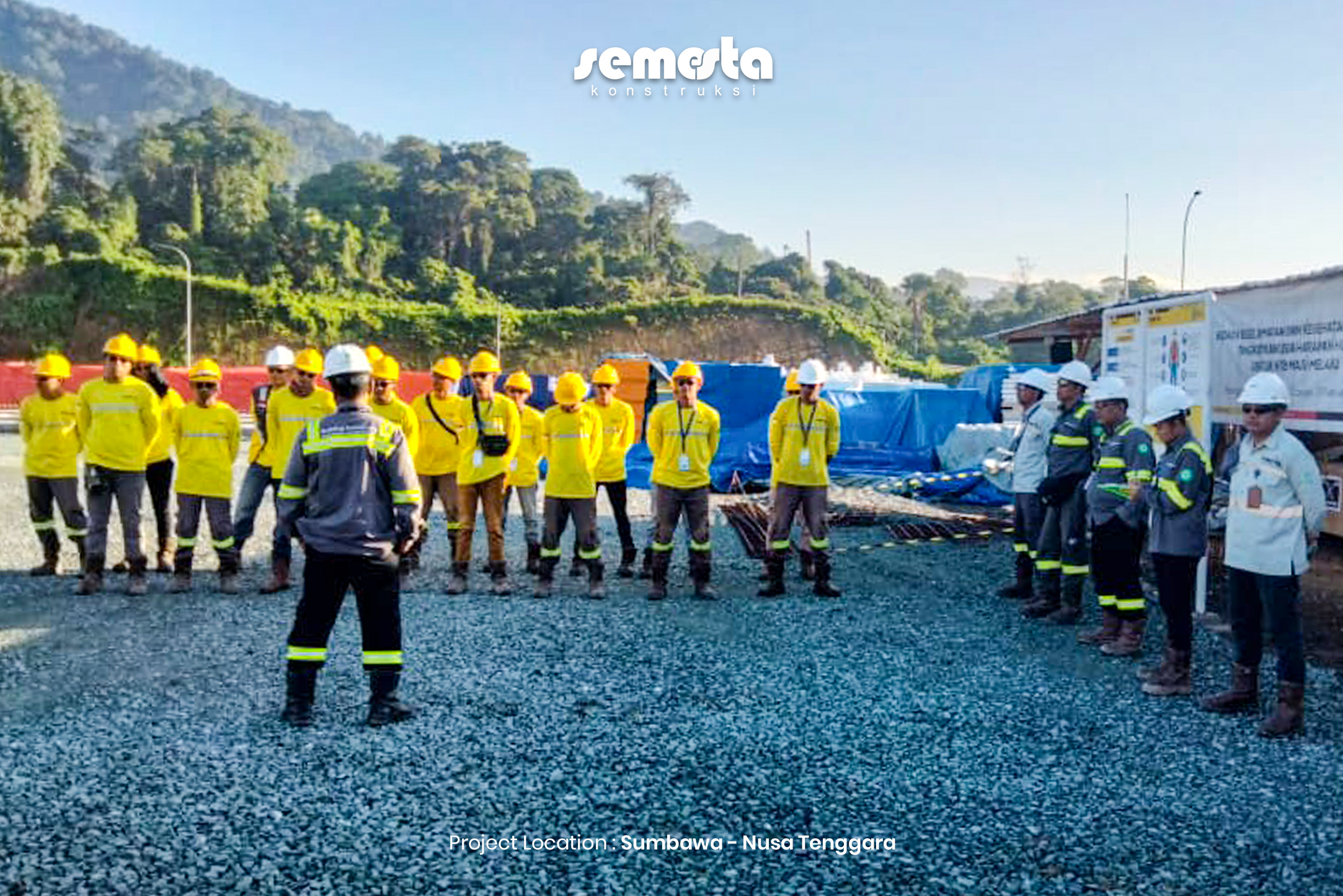
One effective way to implement HSE in the construction field is through toolbox meetings. Semesta Konstruksi regularly holds toolbox meetings before starting construction activities or work to raise awareness among workers about the importance of work safety and to reduce or avoid the negative impacts of construction work.